HIST174 – History of Mexico
A Taste of Ancient Mesoamerica
****************************************
How Ancient is Ancient Mesoamerica?
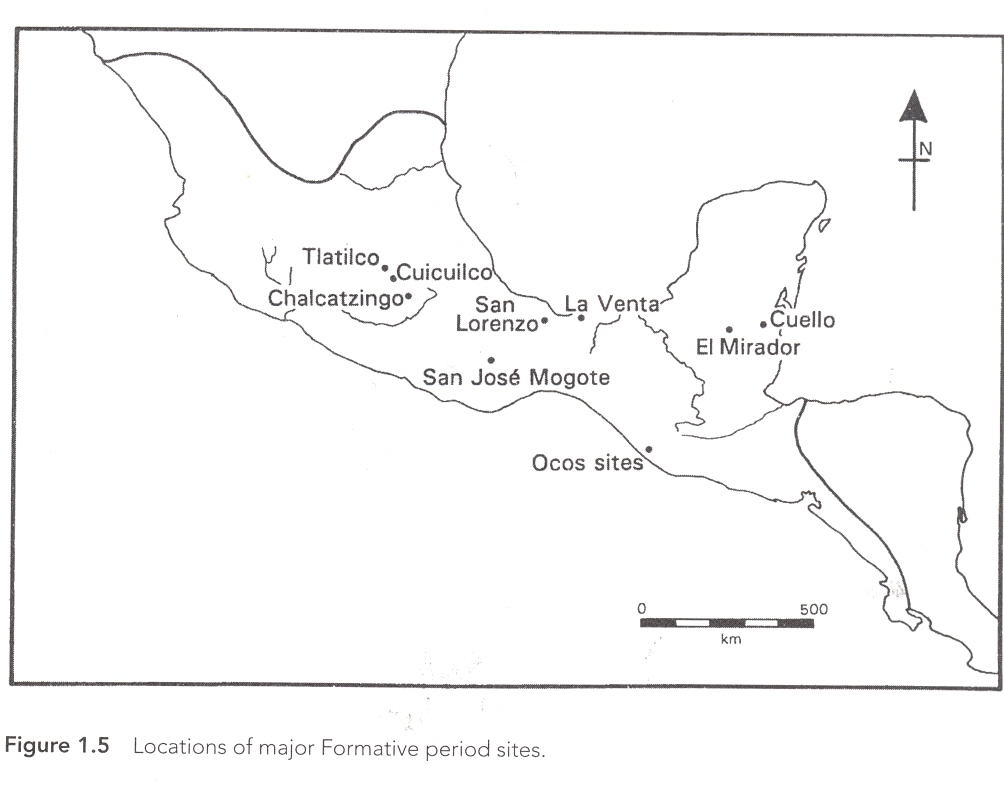
I. The Formative period
A. 8000-3500 B.C., domestication of crops
B. 3000-1800 B.C., agricultural economies and settled villages
C. 1800-300 B.C., emergence of cities, temples and pyramids, trade
-Olmecs (San Lorenzo, 1200-900 B.C.)
-Oaxacan (San José Mogote)
-Maya (El Mirador)
-Central Mexican (Chalcatzingo)D. The Mesoamerican calendar(s):
-ritual: 13 numbers + 20 day names = 260 days
-solar: 18 months of 20 days + 5 extra = 365 days
-calendar round: combo of both, one full cycle = 52-yr "century"
-Maya Long Count: a cycle of 13 bak'tuns (about 5,128 yrs each), began 3114 B.C., ends Dec. 21, 2012
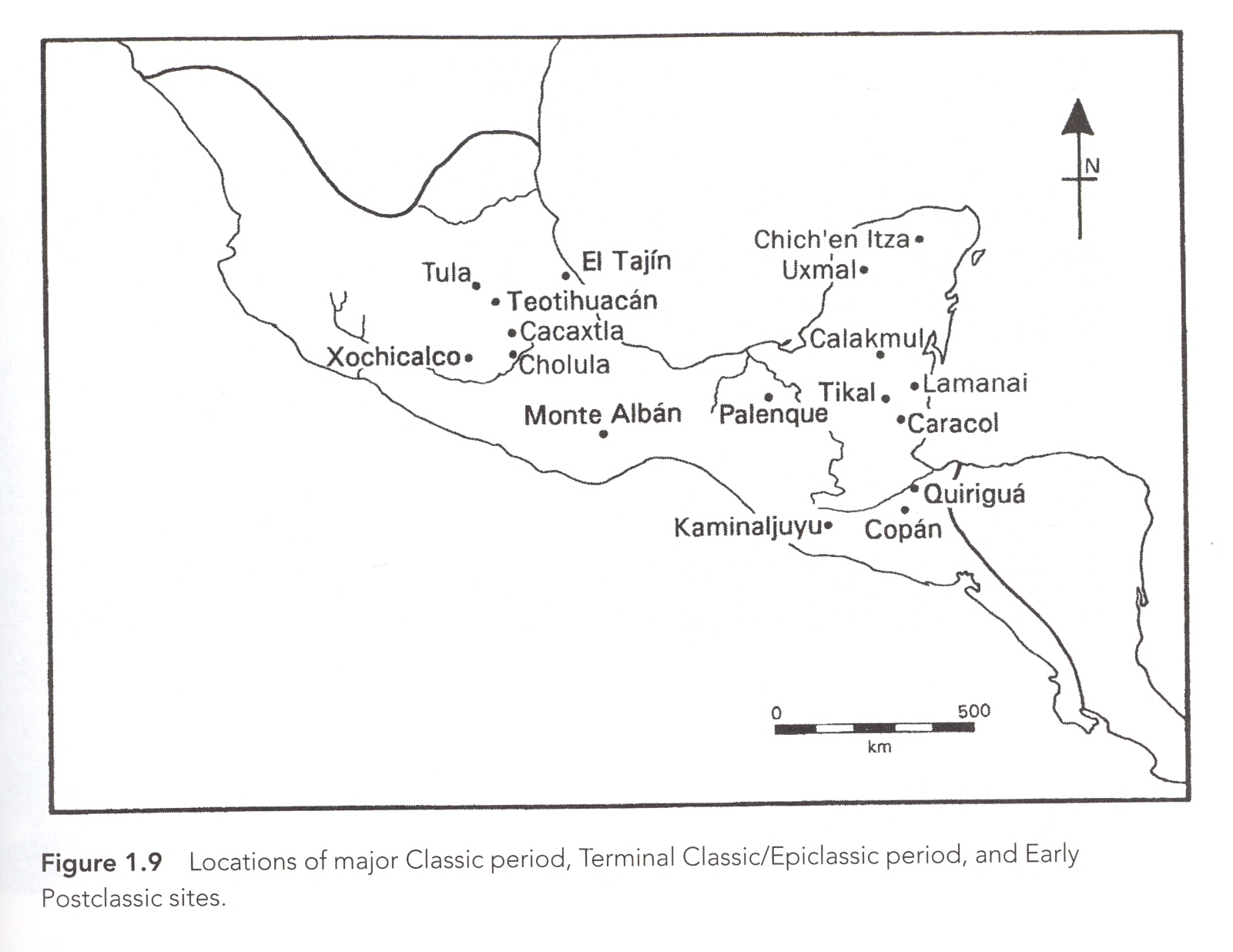
II. The 'Classic' period
A. Oaxaca
-Monte Albán, 500 B.C. - 800 A.D.
B. Maya, 200 - 900 A.D.
-Tikal, Calakmul, Uxmal (Guatemalan lowlands)
-Palenque (Chiapas)
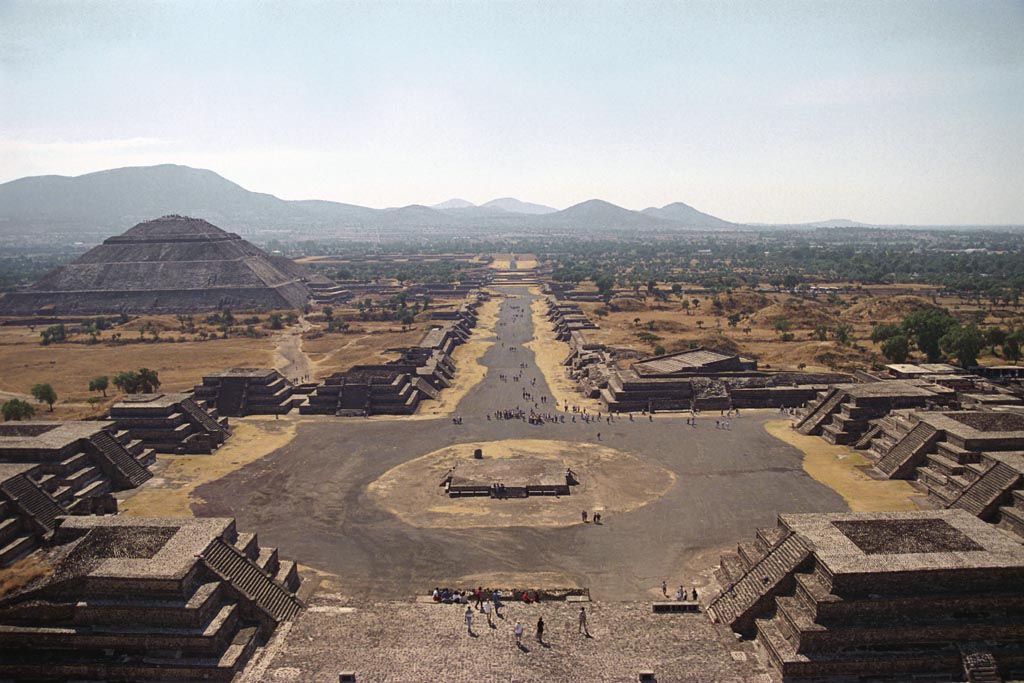
-Copán (Honduras)C. Central Mexico, 150 B.C. - 700 A.D.
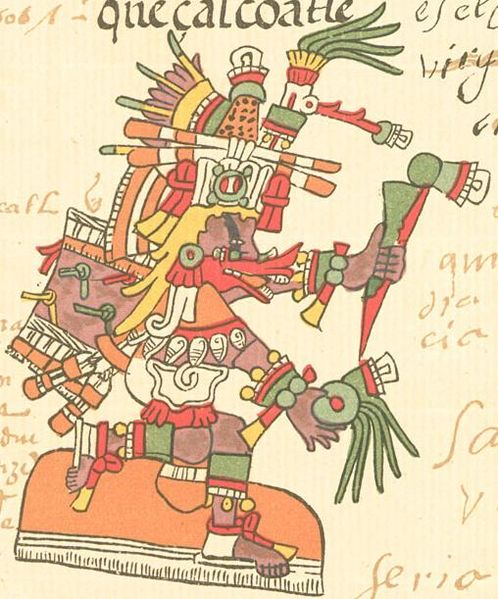
Feathered Serpent (Quetzalcoatl)
How did Mesoamericans Write Their History?
I. Types of Mesoamerican writing
A. Glyphs: ideographic vs. phonetic
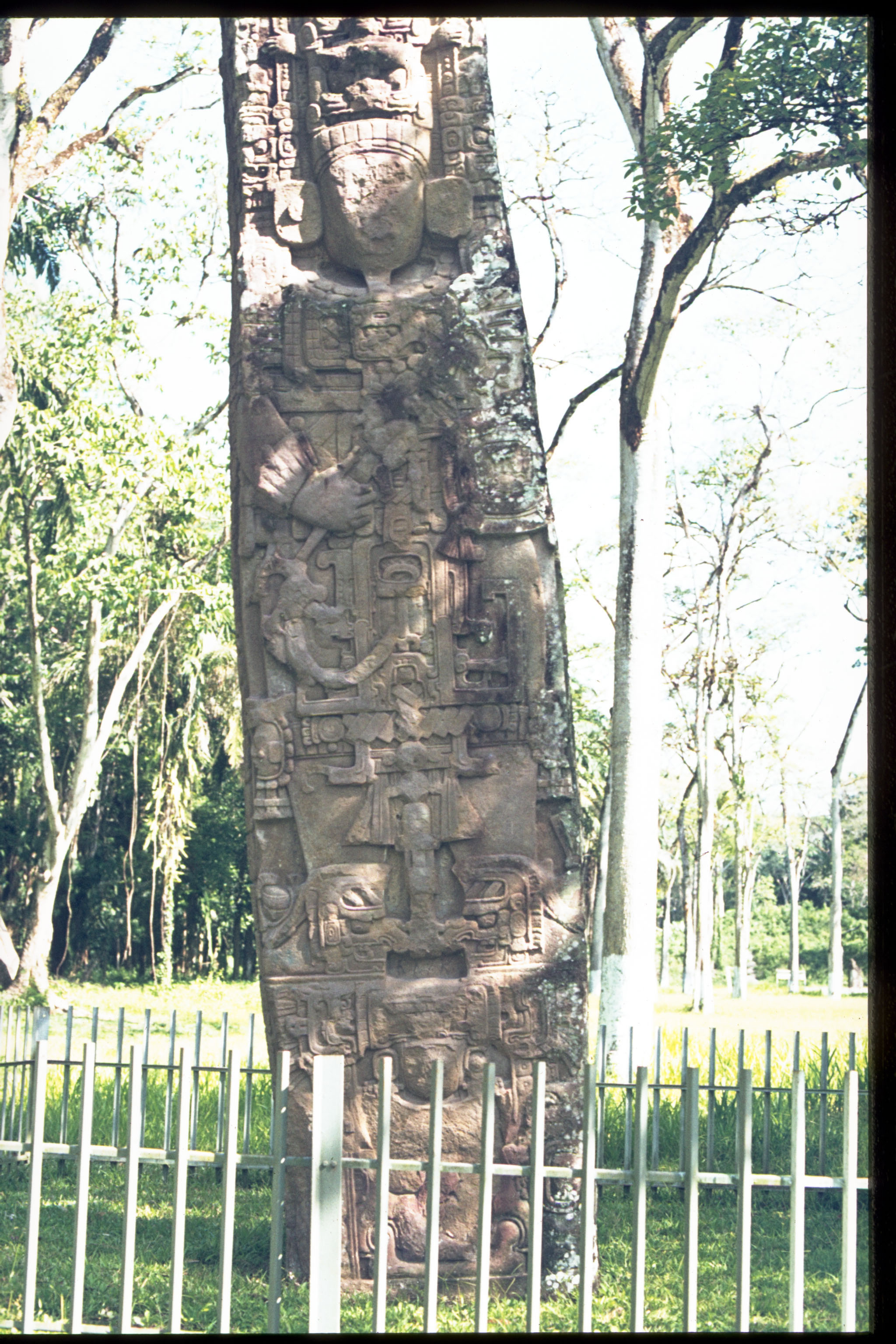
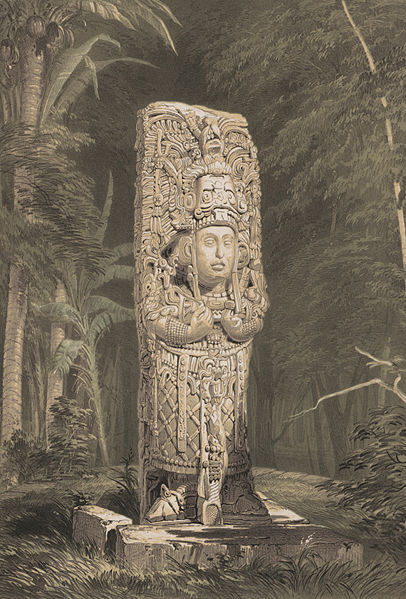
B. Stelae
C. Precolumbian and colonial-era codices
D. Colonial-era manuscriptsK'iche'
Santa Cruz el Quiche (Guatemala)
1703, copied by Francisco Ximénez
1850s, removed to and published in Europe
The Hero Twins: Hunahpu (Hunter) and Xbalanke (Jaguar Deer)
Xibalba
II. Learning to read Maya
A. Influence of 19c antiquities
- 1798, Rosetta Stone
- Frederick Catherwood, John Lloyd Stephens
- Diego de Landa, Relación de las cosas de Yucatán (1566, discovered 1862)B. Breaking the code in the 20c
- 1950s, Yuri Knorosov
- 1960s, Tatiana Proskouriokoff
- 1970s-90s, Linda Schele, David Stuart
III. Learning to read 'Aztec' and 'Oaxacan'
- res gestae (primarily Mixtec)
- cartographic histories (primarily Nahua)
- annals (primarily Aztec/Mexica)