Week Three
The Tenochca Empire (aka the Aztecs)
*****************************************************
I. The Postclassic period
A. Major characteristics
- fragmentation
- migrations
- intellectual and cultural exchangeQuetzalcoatl
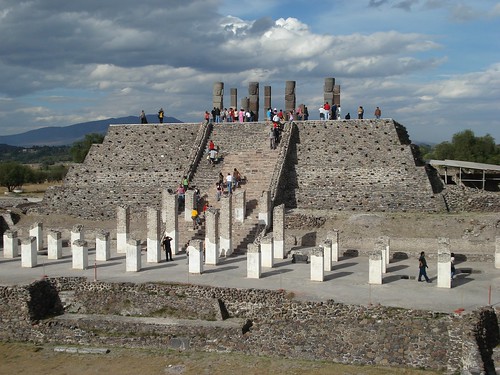
Tollan
ToltecsNOTE: this is a larger idea than just people/culture from the city-state of Tula
B. Major sites and centers
1. Oaxaca
- Zapotecs and Mixtecs
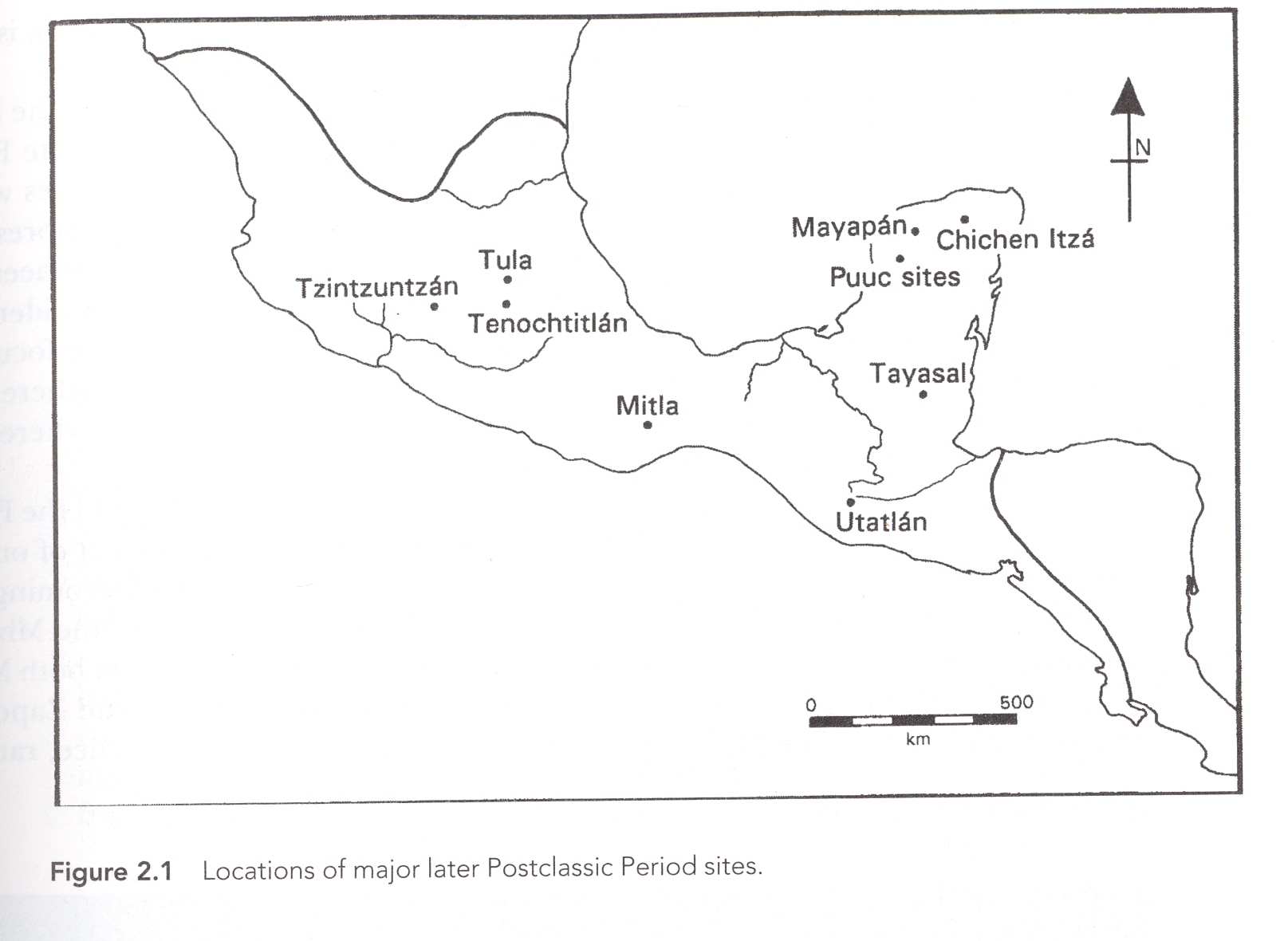
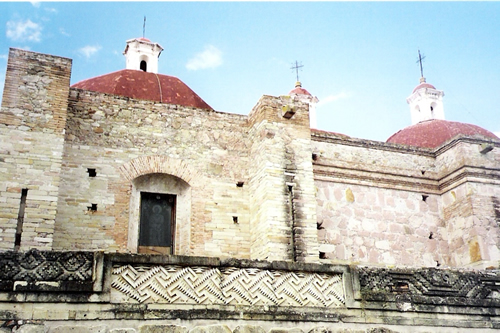
Mitla, 1300-1521
2. Maya
- Yucatán peninsula
Chichen Itzá, 750-1200
Mayapán, 1283-1450
- Guatemala/Chiapas highlands
Iximché (Kaqchikel), 1470-1527
Q'umarkaj/Utatlán (K'iche'), 1225-15243. Central Mexico
II. The Aztec (or Tenochca, for Tenochtitlan) empire
A. Who are the 'Aztecs'?This is a 19th century name for the "Triple Alliance" formed in 1428 between three city-states (the proper term in Nahuatl is altepetl, which means "water mountain"). These three allied altepetl were Tlacopan, Texcoco, and the most powerful of the three, Tenochtitlan.
1. Major expansions
- 1440-1468, Moctezuma I
- 1486-1502, Ahuitzotl2. Methods of conquest
- sequential
- goal: trade and tribute
- ritual and the maintenance of empireFlowery Wars (against Tlaxcala and Huejotzinco)
B. Who are the Mexica?The Mexica are the founders of Tenochtitlan, capital of the Aztec (or Tenochca) empire
- mythic homeland is Aztlán in the "Chichimec" north
- emerged from a mythic cave, Chicomoztoc
- migrated to central Mexico to become "Toltec" c. 1299
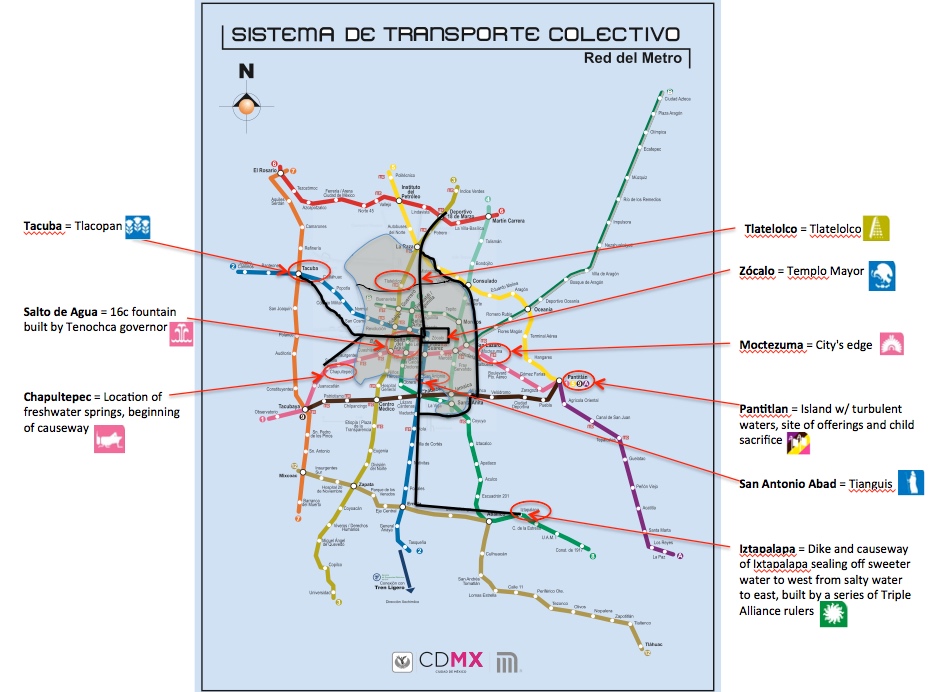
- established two altepetl on island in Lake Texcoco in 1325:Tenochtitlan = the Tenochca Mexica
Tlatelolco = the Tlatelolca MexicaBoth groups are Mexica by virtue of their shared origin,
but relations between them were tense.
Tenochtitlan sometimes lorded its power over Tlatelolco.
The Spanish translated "Mexica" into "mexicanos"
C. Who are the Nahuas?Scholars use the term "Nahua" to describe any native speaker of Nahuatl, the predominant language in central Mexico, natively spoken in Tlaxcala, Texcoco, Xochimilco, Culhuacan, and many other altepetl besides Tenochtitlan and Tlatelolco.
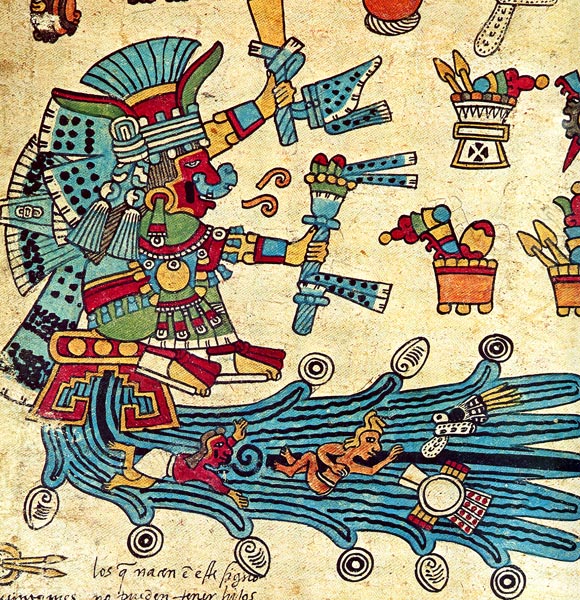
No one called themselves "Nahuas" -- It is not an ethnicity. Ethnicity was a civic and social identity based on shared origin and living together in the altepetl and its subdivisions.- controlling water: Chalchiuhtlicue
- farming the lake: chinampas (the axolotl!)
- Mapa de Santa Cruz