Annual Aristotle and Aristotelianism Conference
June 2010

Annual Aristotle and Aristotelianism Conference
June 2010

OUR THANKS TO THE PRESENTERS AND OTHER PARTICIPANTS IN THE CONFERENCE FOR ANOTHER STIMULATING SET OF PRESENTATIONS AND DISCUSSIONS.
WE LOOK FORWARD TO OUR NEXT MEETING IN SUMMER 2011, THE SIXTH ANNUAL SUMMER CONFERENCE ON ARISTOTLE AND THE ARISTOTELIAN TRADITION.
OWEN GOLDIN & RICHARD TAYLOR
“Science and Intellect in Aristotle and the Aristotelian Tradition”
Fifth Annual Marquette Summer Seminar in
Ancient and Medieval Philosophy,
June 28-30, 2010
Presented by the Midwest Seminar in Ancient and Medieval Philosophy
and the Aquinas and the Arabs Project
with the support of the
Helen Way Klingler College of Arts and Sciences at Marquette
and the Mellon Fund
Marquette University
Department of Philosophy
Milwaukee, Wisconsin,
This Conference is intended to provide a formal occasion and central location for philosophers and scholars of the Midwest region (and elsewhere) to present and discuss their current work on Aristotle’ and his interpreters in ancient, medieval and contemporary philosophy.
For the 2009 conference a record number of applications (41) were received for the 15 slots for presentations. Thematic unity came to play a role in the final selection procedure, as did other considerations. We regret that we had to decline so many very fine proposals.
Conference Proposal Submission Guidelines
Established Scholars: send a title and tentative abstract;
Graduate Students: send a title, abstract, CV and a supporting letter from your faculty advisor or dissertation director.
NOTE: Abstracts should be 150 words or fewer.
Send applications to: Richard.Taylor@Marquette.edu.
OPENING DATE FOR SUBMISSIONS: February 1.
The Selection Committee will select presenters on the basis of quality of proposals (title and abstract) and scholarly record as the primary criteria.
PROGRAM ANNOUNCED: April 1 or earlier if filled.
ATTENDING ONLY: Send Registration check with name, address, academic affiliation.
CONFERENCE REGISTRATION FOR ALL PRESENTERS AND ATTENDEES
(fees cover breakfasts, refreshments, dinner one night)
Advance Registration ($45 by check) Deadline: May 1.
NOTE => After May 1 Registration only at the door: $50 cash.
CHECKS SHOULD BE MADE OUT TO: Marquette University
(Fees are waived for Marquette students, faculty and staff.)
-------------------------------------------------------------------------------------------------------
Registration Form.
=> ALL ATTENDEES (including the Marquette community) are asked to register.<=
NAME:
TITLE:
ACADEMIC AFFILIATION:
ADDRESS:
EMAIL ADDRESS:
TELEPHONE:
CHECK NUMBER:
(Registration fees are waived for members of the Marquette community.)
-------------------------------------------------------------------------------------------------------
Print the Registration Form above and send your check made out to “Marquette University” to:
Richard Taylor
Philosophy Department
Marquette University
P.O. Box 1880
Milwaukee, WI 53201-1881
Registered Attendees:
1. Robert Bolton
2. Keith Bemer*
3. Owen Goldin*
4. Daniel Heider
5. Erick Raphael Jiménez*
6. Eric LaRock*
7. Mark Spencer*
8. Erin Stackle*
9. Richard C. Taylor*
10. Mark Thomas*
11. John Thorp*
12. Julie Ward*
13. Adam Wood*
14. Joel Yurdin*
15. Dr Robert Greene*
16. Dr. Trenton R. Ferro
17. Sarah Pessin, University of Denver
18. Nathan Blackerby, Marquette University*
19. Mara Brandli, Marquette University*
20. Rachael Renteria, Marquette University*
21. Jedidiah Mohring, Marquette University*
22. Robert Ramos, Marquette University*
23. James South, Marquette University*
24. David Twetten, Marquette University*
25. Traci Phillipson, Marquette University*
26. Br. Lawrence LaFlame, Marquette University*
27. Ann Therese Gardner, The Catholic University of America*
28. Daniel De Haan, University of St. Thomas (Houston)*
29. Rebecca Blemberg, Marquette University*
30. Deborah Nash, Marquette University*
31. John Longeway, University of Wisconsin - Parkside
*Fee paid, or waived for Marquette students, faculty, staff.
Conference Schedule
All sessions will be held in the Beaumier Conference Center in the lower level of Raynor Library. (See below for location link.)
MONDAY JUNE 28 :
Breakfast: 8:00 am. Coffee, tea, orange juice, bagels, muffins, et alia, at the Philosophy Department Commons, Coughlin Hall Room 139
Beaumier Conference Center
Presentations
9-10:25: [1] Prof. Robert Bolton, Rutgers University, “Epistemology and Pyschology in Aristotle’s POSTERIOR ANALYTICS II 19.”
10:35-12: [2] Prof. Eric LaRock, Oakland University, Rochester, MI, “An Aristotelian Approach to Mental Causation” PRESENTATION CANCELLED.
12-1:30 pm Lunch: suggestions: AMU (Student Union), Subway, Jimmy John’s Subs, local Pizza restaurant, Qdoba, Miss Katie’s Diner, and more in the immediate area.
Presentations
1:30-2:55: [3] Mr. Adam Wood, Fordham University, New York, “The Incorporeality of Nous and the Science of the Soul in Aristotle’s De Anima”
3:05-4:30: [4] Prof. Julie Ward, Loyola University of Chicago, “Aristotle on Kinds of Thinking”
4:40-6:05: [5] Mr. Keith Bemer, University of Pittsburgh, “The Role of historia in Aristotle’s Philosophy of Science”
7:00 pm *NOTE CHANGE* => Dinner at Gordin Park (2828 N. Humboldt Blvd., Milwaukee) provided thanks to chef Prof. Owen Goldin. This will be at Picnic area 1 (Shelter) at 7 pm. Public bathrooms will be open and rain or shine this is a ‘go’. For a park map, see http://www.county.milwaukee.gov/ImageLibrary/Groups/cntyParks/maps/Gordon1.pdf
Carpooling available.
TUESDAY JUNE 29 : Beaumier Conference Center
Breakfast: 8:00 am. Coffee, tea, orange juice, bagels, muffins, et alia, at the Philosophy Department Commons, Coughlin Hall Room 139
Presentations
9-10:25: [6] Mr. Erick Raphael Jiménez, New School for Social Research, New York, “On Intellect and Scientific Discourse”
10:35-12: [7] Ms. Erin Stackle, Boston College, “Metaphysical Problems in Aristotle with Fitting Together Mathematical and Material Things”
12-1:30 pm Lunch: suggestions: AMU (Student Union), Subway, Jimmy John’s Subs, local Pizza restaurant, Qdoba, Miss Katie’s Diner, and more in the immediate area.
Presentations
1:30-2:55: [8] Prof. John Thorp, University of Western Ontario, London, Ontario, Canada, “Postmodern Aristotle?”
3:05-4:30: [9] Prof. Owen Goldin, Marquette University, Milwaukee, WI, “Philoponus, Forms, and Predicative Chains”
4:40-6:05: [10] Prof. Daniel Heider, University of South Bohemia, Czech Republic, “Abstraction, Intentionality and Moderate Realism. The Ontology and Epistemology of Universals in Francisco Suárez and John Poinsot”
Dinner suggestions: The Milwaukee Ale House; The Rock Bottom Brewery; John Hawks Pub; and many more possibilities. Speak to the organizers for suggestions.
WEDNESDAY JUNE 30 : Beaumier Conference Center
Breakfast: 8:00 am. Coffee, tea, orange juice, bagels, muffins, et alia, at the Philosophy Department Commons, Coughlin Hall Room 139
Presentations
9-10:25: [11] Prof. Joel Yurdin, Haverford College, Haverford, PA, “Between Perception and Scientific Knowledge”
10:35-12: [12] Mr. Mark Thomas, Boston College, “Reconsidering Mathematical Demonstration in Aristotle’s Theory of Science”
12-1:30 pm Lunch: suggestions: AMU (Student Union), Subway, Jimmy John’s Subs, local Pizza restaurant, Qdoba, Miss Katie’s Diner, and more in the immediate area.
Presentations
1:30-2:55: [13] Mr. Mark Spencer, SUNY at Buffalo, Buffalo, NY, “The Cosmic Hierarchy of Lifeforms in Aristotle and Aquinas”
3:05-4:30: [14] Prof. Richard C. Taylor, Marquette University, Milwaukee, WI, “Aquinas and the Arabs: Intellect, Understanding, and Happiness in Arabic Aristotelianism”
4:30-4:45: Closing remarks
Dinner options: TBA
CONFERENCE LOCATION:
Conference sessions will take place in the Raynor Library (1355 W. Wisconsin Ave.) Tuesday, Wednesday and Thursday June 16-18, 2009. For information on the Raynor Library and nearby parking see http://www.marquette.edu/contact/finder/raynor.shtml and the links there.
HOUSING:
On campus housing is available at a modest cost. For information, click here. To reserve a room contact the housing office directly: Carrie Enea at 414-288-7204 or via email at carrie.enea@marquette.edu. Cut-off date for room reservations: May 17, 2009. Rooms requested after the cut-off date are subject to availability.
Rooms will be at Straz Tower, 915 W. Wisconsin Ave., a three block walk from the conference location.
PARKING:
Structure 1, located on 749 N. 16th Street, and Structure 2, located at 1240 W. Wells St ., have been designated the university’s visitor parking facilities. For information on the costs of parking ask at the check-in desk at Straz Tower, 915 W. Wisconsin Ave.
Daytime visitors’ parking 6 am - 5 pm is $5.00 per day at these structures.
Overnight parking ($6) can be arranged at the check-in desk at Straz Hall.
New: For parking information, click here or go to: http://www.marquette.edu/about/visitor_parking.shtml.
HOTELS:
Just a few blocks East from Marquette University is the Holiday Inn Milwaukee City Center, 611 West Wisconsin Ave., Milwaukee, WI 53203. Tel. 1-414-273-2950.
For further information on the hotel, see http://www.ichotelsgroup.com/h/d/hi/1/en/hd/mkecc?irs=null
A few blocks West from Marquette University is the very charming Ambassador Hotel: 2308 W Wisconsin Ave., Milwaukee, WI 53233. Tel.(414) 342-8400
For further information on the hotel, see www.ambassadormilwaukee.com
(Mention that you are attending a Marquette conference may get you a discount. Be sure to ask.)
DIRECTIONS AND MAPS:
For directions to the Marquette Campus, see http://www.marquette.edu/contact/directions/
For a map of the Marquette University campus, see http://www.marquette.edu/contact/CampusMap.pdf
For a map of downtown Milwaukee, see
http://www.wisconline.com/counties/milwaukee/map-downtown.html
For parking information, click here or go to: http://www.marquette.edu/about/visitor_parking.shtml.
TRAVELING TO MARQUETTE UNIVERSITY (& DOWNTOWN MILWAUKEE) FROM
MILWAUKEE’S MITCHELL AIRPORT:
For a shuttle, see http://www.mitchellairport.com/getting.html
Downtown Milwaukee: info from http://kiwinc.itgo.com/mwc/mitchell.html
* Expect a taxi to cost around $30 or a bit more due to fuel costs.
* Most convenient: Airport Connection shared ride van serves a frequent loop of most downtown hotels. http://mkelimo.com/ ($12-15)
* Cheapest: MCTS bus route 80 serves 6th St. downtown, next to the Midwest Airlines Center and nearby hotels. Travel time is 25 minutes, often only a few minutes longer than taxi or van.
http://www.ridemcts.com/routes_and_schedules/schedule.asp?route=80
Straz Tower is at 9th and Wisconsin.
The Conference Center is in the lower level of Raynor Library at 1355 W. Wisconsin Ave.
Midwest Seminar in Ancient and Medieval Philosophy link:
http://web.mac.com/mistertea/Midwest_Seminar/Welcome.html
Aquinas and the Arabs Project link:
http://web.mac.com/mistertea/iWeb/Aquinas%20&%20the%20Arabs/Aquinas%20&%20the%20Arabs.html
MARQUETTE UNIVERSITY PHILOSOPHY DEPARTMENT link:
http://www.marquette.edu/phil/
Presentation Abstracts
Below are the accepted initial proposals in alphabetical order by author.
[forthcoming]
1. Robert Bolton, Rutgers University, “Epistemology and Pyschology in Aristotle’s POSTERIOR ANALYTICS II 19.”
2. Keith Bemer, University of Pittsburgh
“The role of historia in Aristotle’s philosophy of science”
Fundamental to Aristotle’s philosophy of science is the distinction between the recognition that (hoti) something is the case, and the determination of why (dioti) it is the case. While much scholarly attention has been given to Aristotle’s theory of scientific demonstration and explanation, which answers the dioti question, relatively little has been given to the early, pre-demonstrative stage of scientific investigation. This hoti-stage is dedicated to establishing and organizing facts as a preliminary to dioti explanations. Aristotle used the term historia to refer to this early stage of investigation, however it is not altogether clear how he thought it was to be carried out. The Historia animalium, a massive work that has suffered from misinterpretation and relative neglect, appears to be the only treatise in the corpus dedicated solely to the hoti-stage of investigation. In this paper I discuss the role of historia in Aristotle’s philosophy of science and show how the Historia animalium fills this role.
3. Owen Goldin, Marquette University, Milwaukee, WI,
“Philoponus, Forms, and Predicative Chains”
Verrycken has argued that Philoponus’ commentary on Aristotle’s Posterior Analytics includes strata from both later in Philoponus’ career, on the basis of 242.14-243.24, in which Philoponus comments on Aristotle’s dismissal of Platonic forms at APo. 83a32. This is because Verrycken takes the passage to reject the notion that Forms are idea in the Demiurgic intellect, a key feature of Philoponus’ earlier metaphysics. I argue that this is a misreading of the passage. Philoponus understands Aristotle to be rejecting the notion that Forms are ultimate subjects of the sorts of predicative chains that are explicated through demonstration, but Philoponus takes this rejection to be wholly compatible with positing Demiurgic forms as responsible for the physical cosmos. I go on to discuss another aspect of this same passage. Philoponus takes Aristotle to be emphasizing that all nonsubstances inhere in matter. Butmatter (as substrate) is irrelevant to Aristotle’s discussion. In fact, his argument would be eviscerated were to in fact posit matter as the ultimate subject of the predicative chains that Aristotle discusses. I conclude with a discussion of the various philosophical options that would be available to a neoplatonist wishing to interpret Aristotle’s remarks here as in harmony
with a metaphysics that posits intelligible forms as causal principles of the sorts of regularities studied by the physical and mathematical sciences.
4. Daniel Heider, Daniel Heider, University of South Bohemia, Czech Republic
“Abstraction, Intentionality and Moderate Realism. The Ontology and Epistemology of Universals in Francisco Suárez and John Poinsot”
In the last couple of decades Suárez´s theory of universals has become the subject-matter of controversy. The interpretations widely oscillate between the moderate conceptualism and the moderate Platonism. The extreme evaluations of Suárez´s doctrine, I am convinced, are largely the consequence of inadaequate and partial expositions of Suárez´s doctrine itself. They are caused by the following reductive perspectives: 1) Suárez´s metaphysical and epistemological teaching is seen from the Thomistic metaphysical perspective. Thus it comes out as the conceptualism with the extrinsic similarity of particulars as the only extramental foundation for universal concepts. The refusal of the material principle of individuation and the real distinction between essence and existence entails the denial of the objective cognitive ties to the extramental reality. Without the “Platonic forms”, being the constitutive parts on the level of the essential order of things, it is impossible to find the necessary parallelism between “lex mentis” and “lex entis”. Once Suárez accepts the direct intellectual cognition of material singulars, he is obliged to embrace the empirical induction as the only way of the acquisition of universal concepts. 2) Suárez´s doctrine of universals is viewed from the perspective of the Jesuit´s epistemology, which is essentially determined by the Jesuit´s Platonic innatism. Insofar as Suárez denies any possibility of the causal explanation of the contact between the cognitive powers, the only remaining alternative is that the extramental things are the occasion for the formation of concepts. Thereby the necessary extramental foundation “fades from public view” and the “moderate platonism”, or the “pre-established harmony” takes up. 3) Suárez´s tenet of universals is evaluated in the background of his ontology, sc. by his theory of individuation, which is ultimately not different from Ockham´s concept. If there is no ontological priority of the common nature of man in respect to the individual difference (Socrateity), the issue of principle of individuation comes to be the pseudo-problem. The addition of an individual difference to the common nature makes sense only if and if that, to which the given difference is added already somehow extramentally exists, which is not, however, the case for Suárez. 4) Suárez´s doctrine of universals is considered in the background of De anima, however without making provision for all relevant issues. It is true that Suárez has the deep (systematical) reasons for the thesis about the direct intellectual cognition of material singular and is by far too be capricious. However, the question connected with the impressed intelligibile species is only the half of story. More importantly, it is the doctrine of the expressed species, which brings us immediately in the preserve of Suárez´s theory of intentionality.
I am clear about the fact that it is just Suárez´s theory of mental representation, which significantly complements and underpins the metaphysical conclusion (in the Metaphysical disputation - DM), according to which there is the precisely taken nature with the negative community, which exists even extramentally. My claim is that Suárez´s doctrine of psychogenesis of universal concepts, reinforced by the Jesuit´s theory of intentionality, completes the given central metaphysical claim by saying that we are basically “set up” to be in the direct and precisive contact with the extramental things. Suárez´s theory of the expressed species cannot be omitted if one wants to estimate Suárez´s doctrine of universals in its entirety. In concrete, I want to claim that i) it is the theory of expressed species as the act, by which (quo), not in, which (in quo), one grasps the conceptual content common to both the extramental things and intramental concepts; ii) it is the theory of expressed species, which creates the important background for Suárez´s realistic exposé of the objective concept in DM; iii) it is the Jesuit´s theory of intentionality, which enables him to affirm that the metaphysical universal, produced by the extrinsic denomination from the formal concept, is not the being of reason, but the real being.
The systematic inappropriateness of the above-mentioned partial perspectives is amplified by the general absence of the relevant historiographical comparisons in the literature. The majority of them, by right, concentrate on the comparisons with the authors of the High and Late Middle Ages (Aquinas, Ockham, Durandus, Scotus, Biel). Admittedly Suárez draws from those authors, however, it is no less right to say that they approach the issue differently from Suárez. The theological context is by Suárez replaced by systematic. That is why, and in respect to my predilection to Suárez´s moderate realism as well, I take as the highly useful method to compare Suárez´s doctrine with an author, i) who advocates the same systematical approach to philosophy as Suárez (had the identical “Fragestellungen”); ii) who knows and criticizes Suárez´s doctrine; iii) who shares the same basic metaphysical and epistemological assumptions; (iv) whose doctrine is, at least for the most part of interpreters, considered as the exemplary case of moderate realism. I am convinced that those requirements are met by the doctrine of the Portuguese Dominican John Poinsot, who published his Cursus Philosophicus Thomisticus couple of decades after Suárez´s De anima and Disputationes metaphysicae.
The overall thesis of my paper will be that, vis-à-vis that comparison, and contrary to the opinions of the whole range of scholars, Suárez´s theory of universals is not to be evaluated as the case of conceptualism, nor as the instance of moderate Platonism, but as the version of moderate realism, which, strikingly enough, is even “stronger” than that of Poinsot.
5. Erick Raphael Jiménez, New School for Social Research, New York
“On Intellect and Scientific Discourse”
The question raised by my essay bears on how to understand the operation of intellect in relation to its objects, in particular when viewed from the perspective of the methodology of the sciences. My claim is that, on the “divide and explain” paradigm of Posterior Analytics, objects of the intellect proper are primitive unities or “essences” (ti en einai) that cause the essential (kath’ hauto) attributes of kinds to belong to those kinds. Accordingly, I argue for a regulative conception of essence such that the empirical procedures of particular sciences ought to be coupled with philosophical attempts at discerning their grounds of legitimacy in basic ontological non-composites (asuntheta). On this view, the relation between principles and scientific procedure is not strictly one of ground and consequence, hence neither lax nor rigid, but dynamic; the philosophical practice of discerning essences discloses norms for scientific legitimacy, but always in relation to the development of actual sciences.
6. Erick LaRock, Oakland University, Rochester, MI
“An Aristotelian Approach to Mental Causation”
The debate over whether mind is causally efficacious is an old one. Aristotle, for example, did not regard the mind as epiphenomenal, but maintained that mind has causal power to affect matter (De Anima I.4, 407b34- 408a5). Explanatory power is predicated upon causal potency. If the mind is not causal, it is not explanatory. By contrast, it has become almost orthodoxy these days to regard the mind as an impotent by-product of the brain (e.g., see Wegner 2002). With no intrinsic causal power, mind just rides on the fray of neural activity, much like froth rides on a wave. In this paper, I utilize recent findings in neuroscience to motivate an Aristotelian approach to mental causation as an alternative to epiphenomenalism. I conclude that Aristotle’s claim about the causal power of mind is still plausible.
7. Mark Spencer, SUNY at Buffalo
“The Cosmic Hierarchy of Lifeforms in Aristotle and Aquinas”
Aristotle presents and Aquinas elaborates a hierarchy of lifeforms from plants to immortals. This hierarchy is organized in terms of how different lifeforms pursue ends, the control that higher lifeforms have over lower beings, and the ways in which lower lifeforms imitate higher lifeforms. The hierarchically-organized relations among lifeforms make life a guiding principle for the entire cosmos. I argue that Aquinas provides the correct interpretation of Aristotle on this idea. I show that the Aristotelian theories of life as involving self-motion and of vital operations must be understood in terms of this hierarchy of lifeforms, not just in terms of a hierarchy of operations, as some have argued. Finally, I argue that understanding vital operations, especially thinking, in terms of this hierarchy can expand our notions of what persons are, and aid work in contemporary philosophy of mind and personal ontology.
8. Erin Stackle, Boston College
“Metaphysical Problems in Aristotle with Fitting Together Mathematical and Material Things”
We take as daily evident that we can mathematically articulate the material things we consistently encounter, e.g., that skyscrapers will stand, that bridges will bear the weight of hundreds of cars. Without a metaphysical justification for this mathematical application, however, the mathematical knowledge of material things fails our criteria of genuine scientific knowledge (epistemê). In this paper, I shall organize Aristotle’s analysis of the metaphysical basis of this relation between mathematical objects and material things, which is scattered throughout much of his work, into four major questions that arise from his formulation: 1) Are mathematical things substances (ousiai)?; 2) Are mathematical objects separable from perceptible things?; 3) Are mathematical objects constituents of perceptible things?; 4) Is knowledge of mathematical objects somehow knowledge of perceptible things? Through treating each of these questions, I will extract the key metaphysical problems that arise in any attempt to metaphysically justify mathematical articulation of material things.
9. Richard C. Taylor, Marquette University
"Aquinas and the Arabs: Intellect, Understanding, and Happiness in Arabic Aristotelianism."
My focus here is on the critical consideration that Aquinas gives to teachings of philosophers from the Arabic tradition as providing possible models for understanding how a separate substance, in this case God, can be a proper object of knowledge on the part of human beings in ultimate human beatitude or happiness in Commentary on the Sentences of Peter Lombard, Book 4, Distinction 49, Question 2, Article 1, “Whether the human intellect is able to attain to the vision of God in His essence.”
10. Mark Thomas, Boston College
“Reconsidering Mathematical Demonstration in Aristotle's Theory of Science”
This paper offers an alternative reading of Aristotle's perplexing statement that the mathematical sciences demonstrate through first-figure syllogisms (An Post A14). Previous commentators have applied this statement to the part of Euclid's proofs traditionally labeled apodeixis. I argue that it is plausible that Aristotle meant this statement to apply instead to the move from the truth about a particular intuited figure to the truth about a universal class of figures. Both Proclus and certain modern scholars of Greek mathematics recognize this move as an essential part of mathematical demonstration. Moreover, this move is expressed in syllogistic form in the text of Euclid's proofs. Most importantly, Aristotle himself shows an appreciation for this move, especially when speaking of arbitrary instantiations of universals (to tuchon prōton). Although this move is "inductive" rather than deductive, it takes place within the framework of the demonstrative syllogism. Instead of proceeding "top-down," the mathematician here proceeds "bottom-up"—just like inquirers in other sciences, who construct demonstrations by observing facts and then asking the reason why.
11. John Thorp, University of Western Ontario, London, Ontario, Canada
“Postmodern Aristotle?”
There has been much discussion about reconciling two opposing lines of thought in Aristotle concerning our knowledge of the first principles of a science. One idea is that we know them by intellect (nous), understood as a kind of self-authenticating intuition. The other is that we get them by induction. Peace has been made here by suggesting that we acquire knowledge of first principles by induction, but their warrant lies with intellect. This paper explores a third Aristotelian story about our knowledge of first principles, namely that this knowledge is grounded in dialectic. A little-known text of the Topics (101a34-b4) says this unambiguously; moreover, Aristotle's own practice, shown in his defence of the axioms of logic (non-contradiction and excluded middle) in Metaphysics IV, was exactly this. Science, then, according to this view, is like a mediaeval cathedral: an impressively rigid building of stone, resting on wooden piles driven into the soft earth.
12. Julie Ward, Loyola University of Chicago
“Aristotle On Kinds of Thinking”
Perhaps the best known discussion of the sort of thinking Aristotle terms theoria, translated as “contemplation,” or “study,” occurs in Nicomachean Ethics X 7 where he summarizes it as “complete flourishing” (he teleia eudaimonia). Prominent among the features of theoria mentioned in X 7 are that it is the “highest” (1177a19), “most continuous” (1177a21), and “self-sufficient” (1177a27) activity. However, occurrences of theoria outside of EN X 7 reflect a different set of attributes. In De Anima, we find cases of theoria (and its relatives theoresai, theorein) that seem to refer to a process that involves different stages, as in thinking through a matter. For example, in DA I 1 he states that knowing what a substance is useful for knowing (pros to theoresai) the cause of attributes (402b17); later in DA I1 he finds that the natural philosopher needs “to inquire into the soul” (to theoresai peri psyches, 403a28). Additional cases of we might term “non-standard” theoria occur in DA II 4 (415a21), Anal. Po. I 32 (88a18-19), and EN VI 5 (1140a24-25), and Meta. IV 2 (997a20-21) among others. The present paper suggests ways of differentiating these uses, beginning with Aristotle’s distinction in Meta. IX 6 (1048b18-35) between kineseis, or motions, and energeiai, or activities. According to Meta. IX 6, an action that has its end internal to it, such as seeing or thinking, counts as an energeia, whereas if the end is external, such as walking or building, it is a kinesis. This differentiation proves useful to my consideration about kinds of thinking but to a limited extent.
13. Adam Wood, Fordham University, New York
“The Incorporeality of Nous and the Science of the Soul in Aristotle’s De anima”
I have two fish to fry. First, I’ll argue that De anima 3.4–5 shows Aristotle answering affirmatively a question he raises near the beginning of the work, namely whether any of the soul’s affections are proper to it alone. Second, I’ll argue that this initial conclusion reveals something important about the very first question Aristotle broaches in the work: what method and starting-points are employed in the science of the soul. Aristotle’s position, I’ll claim, shows that investigating the human soul is not merely an empirical concern discharged by natural science, but also a rational concern discharged by logic, epistemology, and possibly even metaphysics. I’ll proceed by defending these views against two rival interpretations of the passage, the “transcendental interpretation,” on which it doesn’t describe a faculty immanent to human beings at all, and the “bad science interpretation,” on which it does, but only as the result of Aristotle’s faulty physiology of cognition.
14. Joel Yurdin, Haverford College, Haverford, PA
“Between Perception and Scientific Knowledge” Joel Yurdin and Pieter Sjoerd Hasper
Aristotle assigns experience (empeiria) key roles in the acquisition of art (technē) and scientific knowledge (epistēmē). This paper addresses two issues concerning Aristotle’s conception of experience: (1) how experience differs from art and scientific knowledge and (2) why experience produces practical success. We argue that, in humans, experience involves a universal, or indefinitely general, judgment linking two or more kinds. Experience differs from art and scientific knowledge not in that experience is about particulars, but in that experience needn’t describe any explanatory relations among kinds. We argue that experience’s practical success depends on two factors: (i) the judgment experience involves partially reflects (though not necessarily under an explanatory description) a relation between natural kinds in the world, and (ii) the history or training through which experience is acquired furnishes its possessor with the ability to recognize instances of relevant kinds.


For information on the “Aquinas and the Arabs International Working Group,” click here or visit www.AquinasAndTheArabs.org.
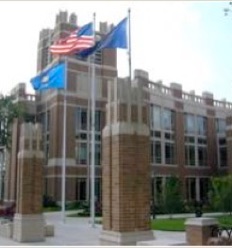
Marquette Hall
Alumni Memorial Union
John P. Raynor, S.J., Library,
Marquette University
For information on the June 24-25, 2010, conference
“Philosophy in the Abrahamic Traditions”
click here.