
THE MIDWEST SEMINAR IN ANCIENT AND MEDIEVAL PHILOSOPHY


Marquette University Faculty Participants: Owen Goldin (Ancient), Susanne Foster (Ancient, Ethics), John Jones (Medieval Social Thought, Neoplatonism), James South (Late Medieval & Renaissance), Andrew Tallon (NeoThomism, phenomenology), Richard C. Taylor (Medieval Latin & Arabic), Roland Teske, S.J., (Medieval, Augustine, Philosophy of Religion), David Twetten (Medieval, Aquinas) and others from Marquette and other regional universities.


Recent visiting participants in the seminar have included Suzanne Stern-Gillet (Bolton Institute), Alfred Ivry (New York University), Thomas Williams (University of Iowa), Eugene Garver (Saint John's University), Patricia Curd (Purdue University), Cristina D'Ancona (Università di Padova), John Sisko (College of William and Mary), Jeffrey E. Brower (Purdue University), Mary J. Sirridge (Lousiana State University), Richard Tierney (University of Wisconsin at Milwaukee), Kenneth Seeskin (Northwestern University), Ruth Glassner (Hebrew University, Mt. Scopus, Jerusalem), Steven Harvey (Bar Ilan University), Ray Weiss (University of Wisconsin at Milwaukee), Hye-Kyung Kim (University of Wisconsin at Green Bay), Lorraine Pangle (University of Texas at Austin), Josep Puig Montada (Universidad Complutense de Madrid), Roslyn Weiss (Lehigh University), Helen Lang (Villanova University), Andrew Payne, Universityof St. Joseph, Daniel Frank, Purdue University, Andreas Speer, Thomas Institut, Cologne, Carlos Fraenkel, McGill University, Sarah Pessin, University of Denver, and others.


DIRECTIONS AND MAPS:

- For directions to the Marquette Campus, see http://www.marquette.edu/contact/directions/

- For information on the Raynor Library and nearby parking see

http://www.marquette.edu/contact/finder/raynor.shtml.

- For information on the Alumni Memorial Union (AMU) and its location, see

http://www.marquette.edu/contact/finder/union.shtml

- For information on Cudahy Hall and its location, see

http://www.marquette.edu/contact/finder/cudahy.shtml

- For a map of the Marquette University campus, see http://www.marquette.edu/contact/CampusMap.pdf

- For a map of downtown Milwaukee, see

http://www.wisconline.com/counties/milwaukee/map-downtown.html


Send requests for information to:

Richard C. Taylor, Department of Philosophy, Marquette University

Email: mistertea@mac.com or Richard.Taylor@Marquette.edu.

Telephone: (414)-288-5649, Fax: (414)288-3010


SOME VALUABLE LINKS


Aquinas and the Arabs: A Project in Medieval Philosophy:

http://web.mac.com/mistertea/iWeb/Aquinas%20&%20the%20Arabs/Aquinas%20&%20the%20Arabs.html


Marquette University Philosophy Department: http://www.marquette.edu/phil/
 

Marquette University

Milwaukee, Wisconsin

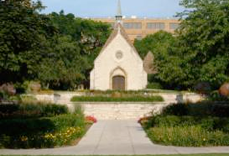
St Joan of Arc Chapel

The Marquette University Midwest Seminar in Ancient and Medieval Philosophy is pleased to present

Prof. Dr. Pedro Mantas

Faculty of Humanities, Universidad de Córdoba

presenting

Mantic arts and the evolution of the science curriculum in the Middle Ages

(abstract below)

Spring 2016 date To Be Announced

Raynor Memorial Library, room 330b


Prof. Dr. Pedro Mantas-España (Córdoba, Spain, 1960). MA The Pontifical University of Comillas (Madrid), PhD studies at the Autonomous University of Madrid and The Warburg Institute (London). PhD thesis (1994, supervisor Prof. Charles Burnett) Adelard of Bath’s De eodem et diverso, an Attempt at Synthesis in the Twelfth-Century Renaissance.


Assistant Professor at the University of Cordoba (Dpt. of Social Sciences and Humanities - Philosophy), I share part of my research activity at the ‘Instituto de Filosofia – Gabinete do Filosofia Medieval’ (IF-GFM) of the University of Porto (Portugal), ‘The Warburg Institute’ (London) and, recently, at the ‘University of Leuven’ (KU Leuven - Belgium). In those institutions I have taught different seminars on Medieval Philosophy and Medieval Transmission of Knowledge.


I’m a founding member and Secretary of the ‘Society of Medieval Philosophy’ (Sociedad de Filosofía Medieval - SOFIME), an academic society on Medieval Philosophy founded at the University of Saragossa (1990); member of the ‘International Society of Medieval Philosophy’ (SIEPM); Secretary of the Spanish Journal of Medieval Philosophy (Revista Española de Filosofía Medieval), an academic journal associated to SOFIME, The University of Saragossa, and since recently to The University of Cordoba; member of the Steering Committee of the ‘Cordoba Near Eastern Research Unit’ (CNERU) of the University of Cordoba; Assistant Editor of the recently created (2015) Mediterranea. International Journal on the Transfer of Knowledge, an academic journal associated to the CNERU, The Warburg Institute, KU Leuven, Tel Aviv University, Syddansk Universitet (Copenhagen, Denmark) and the ‘Instituto de Filosofía’ (University of Porto).


Currently I’m taking part into two National Research Projects: ‘Greek-Arabic-Latin Biblical and Patristic Manuscripts’ (FFI2014-53556-R); ‘Pirronism and Classical Skepticism in its Historical Evolution: from the Antiquity to the Early Middle Ages’ (FFI2012-32989). I’m also international researcher of the International Research Project ‘Iberian Scholastic Phi-losophy at the Crossroads of Western Reason: The Reception of Aristotle and the Transition to Modernity’ (IF-GFM, Universidade do Porto).


My research covers two fields: transfer of knowledge in the Middle Ages (Twelfth Century Renaissance in particular) and hermeneutics on the History of Philosophy and the arts (yet this second topic is more connected with my academic teaching than my research). I focus on the exploration the scientific and philosophical contacts between the Latin intellectuals and the Arabs masters, the reception and interpretation of scientific and philosophical texts and the ideas translated and interpreted from Arabic into Latin. I pay particular attention to the development of the conception of nature and reason in the Latin West as a result of the fruitful intellectual relations between Arabic, Jewish and Latin scholars.


For CV, click HERE.


“Mantic arts and the evolution of the science curriculum in the Middle Ages”


It is well known that the literature on the division or classification of the sciences was a popular genre among the Latin school masters along the Twelfth and Thirteenth centuries. In that context, the classification was intended to illustrate how the study of philosophia and the subjects matters which articulated it could be conceived. Such study served as a kind of introduction to philosophy centered on the organization and improvement of the artes liberales. However, linking philosophia with the arts curriculum was a process which developed over time, as did the identification of philosophia with the whole available knowledge. In this context of knowledge development in the new learning centres in this period, efforts at scientific classification were of particular significance and played an essential role the integration of new arts in the academic curricula and the future progression of science. However, some of those new arts which would contribute to the evolution of science were to be taught and practiced outside of the academia.